Dealing with a front tooth gap you've been covering up in every photo? Dentist Open Now connects you with a specialist in Oakridge, OR who treats this specific issue every week, not occasionally.
Call the number below and a scheduling coordinator finds you the next available specialist.
+1-866-227-2801 Call Now
Losing a tooth changes more than your smile — it changes how you chew, how your jawbone holds its shape, and eventually how your other teeth start to shift into the gap. An implant fuses directly into the jawbone through osseointegration, giving you something a bridge or partial can't: a replacement root, not just a replacement tooth.
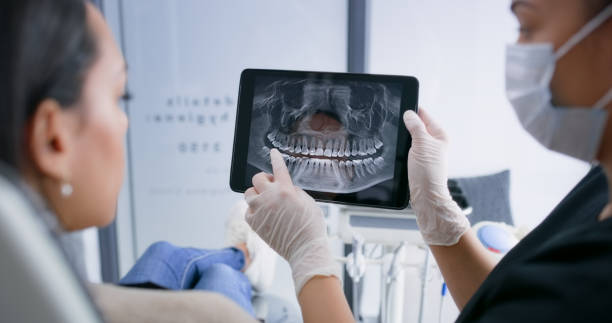
Every case starts with a CBCT scan so the specialist knows bone volume and nerve position before the surgical guide is even made. For patients with lower bone density, bone grafting or a sinus lift is scoped out during that same consultation — not discovered mid-surgery.
The waiting period after placement exists for a reason — rushing the crown onto an implant that hasn't fully integrated risks the restoration failing. Most patients aren't left showing a gap during healing, since a temporary option is fitted while the implant integrates.
Every implant case goes through a specialist who does this procedure routinely, not as a side offering.
Digital scans build a precise surgical guide so the implant lands exactly where it was planned, not by estimation.
Consultation, placement, healing abutment, and final crown are each priced separately so you know what you're paying for at every step.
If your jawbone needs building up first, that's handled without bouncing you to a separate specialist's office.
Whatever the specifics of your case, the specialist you reach through us has handled it before.
One missing tooth gets one implant post and one crown, designed to blend in rather than stand out.
Multiple missing teeth in a row can be replaced with a bridge anchored to as few as two implant posts.
A full arch of missing teeth is restored using just four strategically angled implants per jaw.
If your current dentures move when you eat, implant anchors can stabilize them without a full-arch rebuild.

Prepares thin or shallow bone so it can properly support an implant post long-term.
Select cases qualify for a temporary crown placed the same day as surgery, with the final crown fitted after healing.
You describe what's going on; no automated menu, no long hold.
We match you with a nearby specialist experienced in this exact procedure and check real-time openings.
You get a clear explanation of the treatment plan and its cost before any work begins.
Treatment proceeds on the agreed plan, with clear aftercare instructions and a follow-up if the case calls for one.
"Explained every step before doing anything. First time a dental visit didn't feel rushed."
"Got in faster than I expected for something this specific. Staff were sharp and direct."
"Price they quoted on the phone matched the invoice exactly. No surprise charges."
Most cases run three to six months total, mainly waiting for the bone to fuse to the implant post before the crown goes on.
Local anesthesia keeps the procedure itself pain-free; mild soreness afterward is usually managed with over-the-counter pain relief.
Low bone density doesn't automatically rule out implants — grafting is a common first step for many patients.
Pricing depends on the number of implants and any bone work required, and it's broken down for you before treatment starts.
An implant replaces the tooth root directly in the jawbone, while a bridge anchors to the neighboring natural teeth instead.
With proper hygiene and regular checkups, implants commonly last twenty years or longer, often a lifetime.
We keep an updated roster of specialists across Oakridge and the surrounding zip codes, so a nearby provider is already in our network.
Licensed to practice in OR, credential-checked before joining the network.
Call now and a real coordinator will match you with a specialist and a confirmed time.
Call +1-866-227-2801 Now